For centuries, we’ve been told that gold built the world. Gold crowns kings. Gold fuels empires. Gold rushes shape history. But what if the world actually ran on silver, not gold?
Long before gold became the ultimate symbol of wealth, the global economy was driven by something far less glamorous: silver. It moved across continents, connected distant civilisations, and powered trade from the markets of the Abbasid Caliphate to the far reaches of the Viking world.
So why don’t we talk about it? Because silver didn’t fail. It just proved harder to control.
Latest Post: Why Kalibiru Raja Ampat May Be Indonesia’s Most Pristine Waters Yet
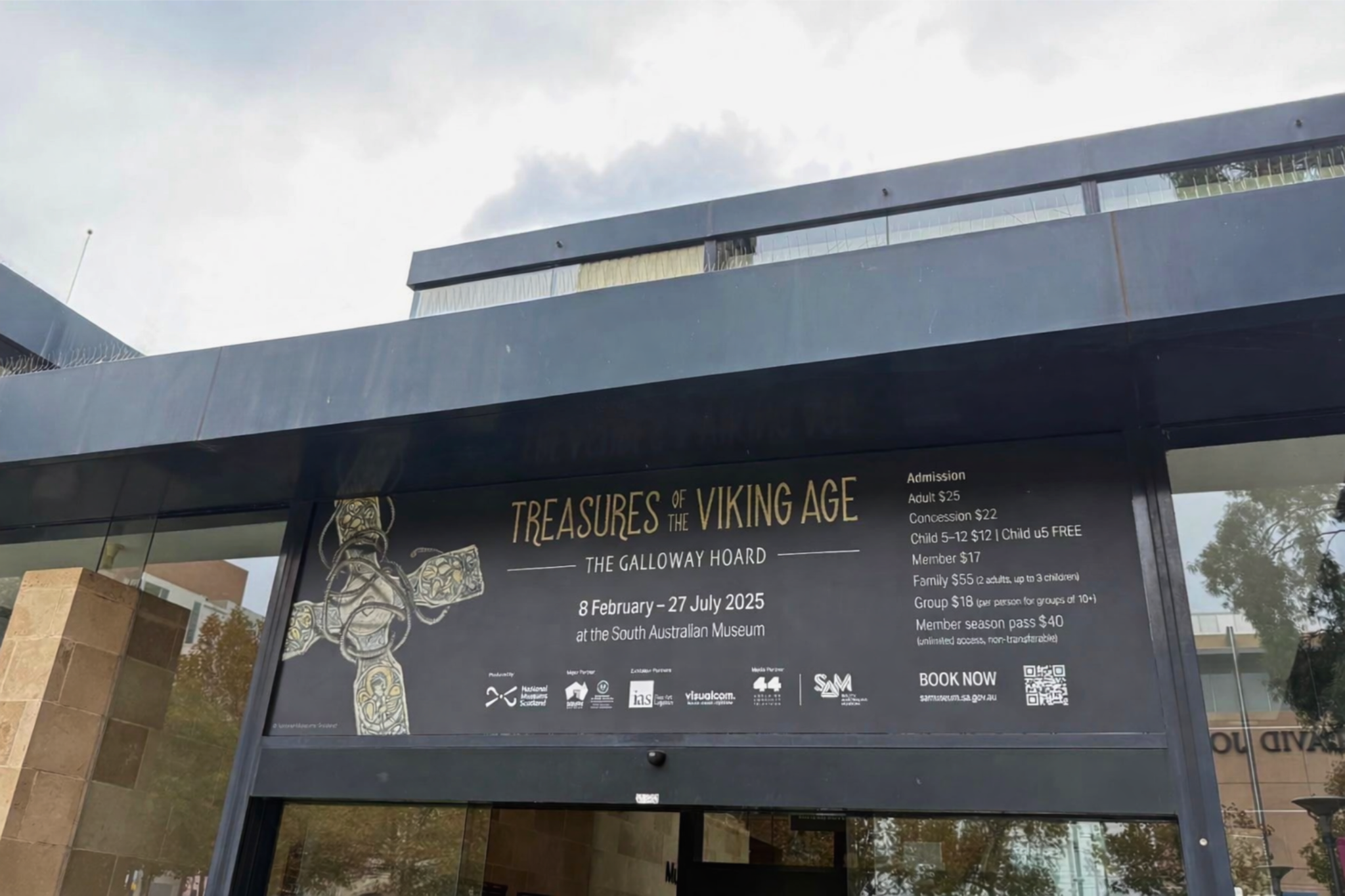
Treasures of The Viking Age: The Galloway Hoard

The theme presented by the South Australian Museum that month is, in my view, quite fascinating. The museum in Adelaide, Australia, showcased a treasure hoard buried around 900 AD and only discovered in 2014 in southwestern Scotland. The collection comprises a remarkable variety of objects and materials associated with the Vikings and is considered one of the most significant Viking hoards ever discovered in Britain and Ireland.
The Viking warriors had a very close relationship with silver. For them, precious metal was not just about money—it was also a symbol of wealth and power. Like many societies throughout history, the Vikings displayed status through elaborate jewellery or weapons decorated with expensive ornaments.
But why were the Vikings so obsessed with silver at that time? It coincided with what is often called a “bullion boom” (around 860–950 AD). During this period, large amounts of silver entered the Viking world, especially in the form of Dirham coins from the Abbasid Caliphate and the Samanid Empire. These flowed in through eastern trade routes connecting them to the Islamic world.

Interestingly, at this time, the Vikings did not rely entirely on coinage. They often used silver in the form of ingots, rings, or even chopped fragments that were weighed according to need. Historical records suggest that during the 9th century, the total amount of silver in Viking hands may have reached around 30,000 pounds—a significant quantity for that era.
Nevertheless, coins gradually became more commonly used, although they still coexisted with a weight-based exchange system. In other words, the value of goods was often determined by the weight of silver rather than the number of coins alone. Over time, this system slowly evolved. While earlier values could depend on factors such as quality or the status of the giver, by the late Viking Age, people increasingly viewed value in terms of how many coins were paid.
At the same time, the Vikings were also known as exceptional explorers. They travelled widely across Europe—reaching as far south as the Mediterranean and as far east as Baghdad. Some even went further toward the Caspian Sea. In other directions, they sailed north and west, reaching Iceland, Greenland, and even North America, where they established settlements.
The Rise of the Gold Standard
From the 16th to the 18th century, the global flow of precious metals was dominated by one major power: the Spanish Empire. One of the most important outcomes of this system was a silver coin known as the Spanish dollar, or peso de ocho.
This coin was widely used in the Philippines, where it was exchanged for various Asian goods such as silk, spices, and porcelain. These goods were then shipped back to Europe and the Americas.
This trading network became known as the *Manila Galleon Trade. For more than 250 years, Manila served as a key meeting point between the Americas and Asia. In this city, silver from Spanish territories was exchanged for Chinese goods such as tea, silk, and spices. The strong demand for silver made China one of the main destinations of global silver flows.

It was only around the late 1800s that silver began to lose its role as a global standard. This shift was driven by the rise of colonialism, when European powers began reshaping global trade rules to serve their own interests. One of the most significant changes came from the United Kingdom, which officially adopted the Gold Standard in 1821.
In practice, many colonial territories were forced to adjust their monetary systems to match the gold standard, even though they had previously been more familiar with silver-based economies. This shift was not merely a change in metal, but a transformation in the structure of power itself. By the late nineteenth century, the major industrial nations—Britain, Germany, France, Japan, and the United States—had all adopted the system.
The gold standard worked in a relatively simple way: every unit of currency was backed by a fixed amount of gold. Governments or central banks held gold reserves to guarantee the value of their money.
This idea was explained through David Hume’s price-specie flow mechanism. In simple terms, if a country imports too much, gold flows out. As a result, the money supply shrinks, prices and wages fall. This makes exports cheaper and more competitive, while imports become more expensive—eventually bringing trade back into balance.
Conversely, when gold flows in, the money supply increases, prices rise, exports become less competitive, and imports increase. In theory, this system is self-correcting, balancing itself without heavy government intervention.

As Western industrial dominance grew stronger, the need for a more controlled financial system also increased. In this context, gold became the more “ideal” choice. Compared to silver, gold is much rarer, making its supply more limited and easier to control by states and major financial institutions. This made gold better suited for the emerging modern financial system, which was increasingly built on debt, banking, and large-scale investment.
Silver, on the other hand, had different characteristics. It was more abundant and widely distributed, making it harder to control in a centralised way. In many respects, silver was more “democratic”—accessible and usable by a wider range of people. But precisely because of this, in an increasingly centralised and structured system, silver gradually lost its position.
The Return of Silver?
For centuries, silver was the backbone of economies—from Viking trade networks to global systems connecting multiple continents. Over time, its role was gradually replaced by gold and later by modern financial systems. Yet interestingly, amid today’s economic uncertainty—ranging from inflation to geopolitical tensions—silver is once again entering the conversation.
Not as a nostalgic return to the past, but as a reminder that there once existed a simpler, more distributed, and more accessible system. This raises a question that feels increasingly relevant: does the concept of a “silver economy,” once used in historical contexts such as the Viking Age, still hold meaning in today’s world?
China and several other countries have historically used silver as a major part of their monetary systems, showing that such a system can function at large scale. Interestingly, in recent developments, China has also begun taking steps to regulate the silver market more tightly.
The Chinese government has reportedly introduced export restrictions on silver, potentially worsening existing global supply shortages. This policy is expected to push hundreds of small and medium-sized exporters out of the market—companies that play a key role in supplying silver to industrial users and refiners worldwide.
According to CNBC, sources from Chinese state media suggest that this policy reflects a shift in how silver is viewed—from a simple commodity to a strategic material. As a result, silver exports are increasingly being regulated in a manner similar to other critical resources such as rare earth metals.
This shift highlights one clear trend: silver is no longer seen purely as a medium of exchange or industrial commodity, but is gaining strategic importance in a geopolitical context. In an era of global competition and economic uncertainty, control over resources like silver can become a new form of power—reminding us that this metal, once central to global trade, may be finding a renewed role in the global balance of influence.
The world may never return to a silver-based system as it once was. Modern economies are too complex, too interconnected, and too centralised to fully reverse course. However, the renewed interest in silver today reveals something deeper.
Silver is not just a metal. It once formed the foundation of a more open economic system—one that was not fully controlled by a single authority, but moved according to trade flows and human needs. It circulated, changed hands, and spread along trade routes rather than being dictated solely by policy.
In today’s increasingly centralized and structured world, silver can be seen not only as an asset, but also as a different way of thinking about value itself. It reminds us that not everything needs to be controlled from the center in order to function.
Sometimes, what is simple endures precisely because it is flexible and dispersed, not because it is tightly controlled from above.
*Giráldez, Arturo. The Age of Trade: The Manila Galleons and the Dawn of the Global Economy. Lanham, MD: Rowman & Littlefield, 2015.
Previous Posts






Leave a Reply