Coin Meditation is a simple meditative practice performed by dropping coins one by one into a row of small metal bowls—108 in total, a number considered sacred in Buddhism. Each coin represents a step of awareness: a prayer, a wish, or an intention gently released through the soft sound of metal touching metal.
In this tradition, it is believed that if a person manages to fill all 108 bowls while sincerely offering their prayers, the hopes and dreams they carry may eventually come true. Perhaps that is where its true allure lies. Even those who claim not to believe in a Creator may, at some point, fall in love with something irrational—hope, miracles, or the quiet desire to believe.
Latest Post: Join an Open Trip to Krakatau: Step Into the Ring of Fire
This practice is no longer about faith or disbelief, but about experience. When someone stands in silence, repeating the same movement 108 times while tucking prayers deep into their heart, something slowly begins to soften: the longing to be heard by something greater than oneself.
And in the quiet space between the falling coin and the whispered wish—along the long corridor of Wat Pho, beside the majestic Reclining Buddha—God, in whatever form, may be quietly present.
Wat Pho, Home to Thailand’s Largest Reclining Buddha

If you visit Bangkok, Thailand, exploring its temples is almost unavoidable. One of the most famous among them is Wat Pho, located in the Phra Nakhon district near the Grand Palace. Due to its central location, the temple is crowded with visitors every day—and for good reason. There is a clear explanation why Wat Pho remains a must-visit destination.
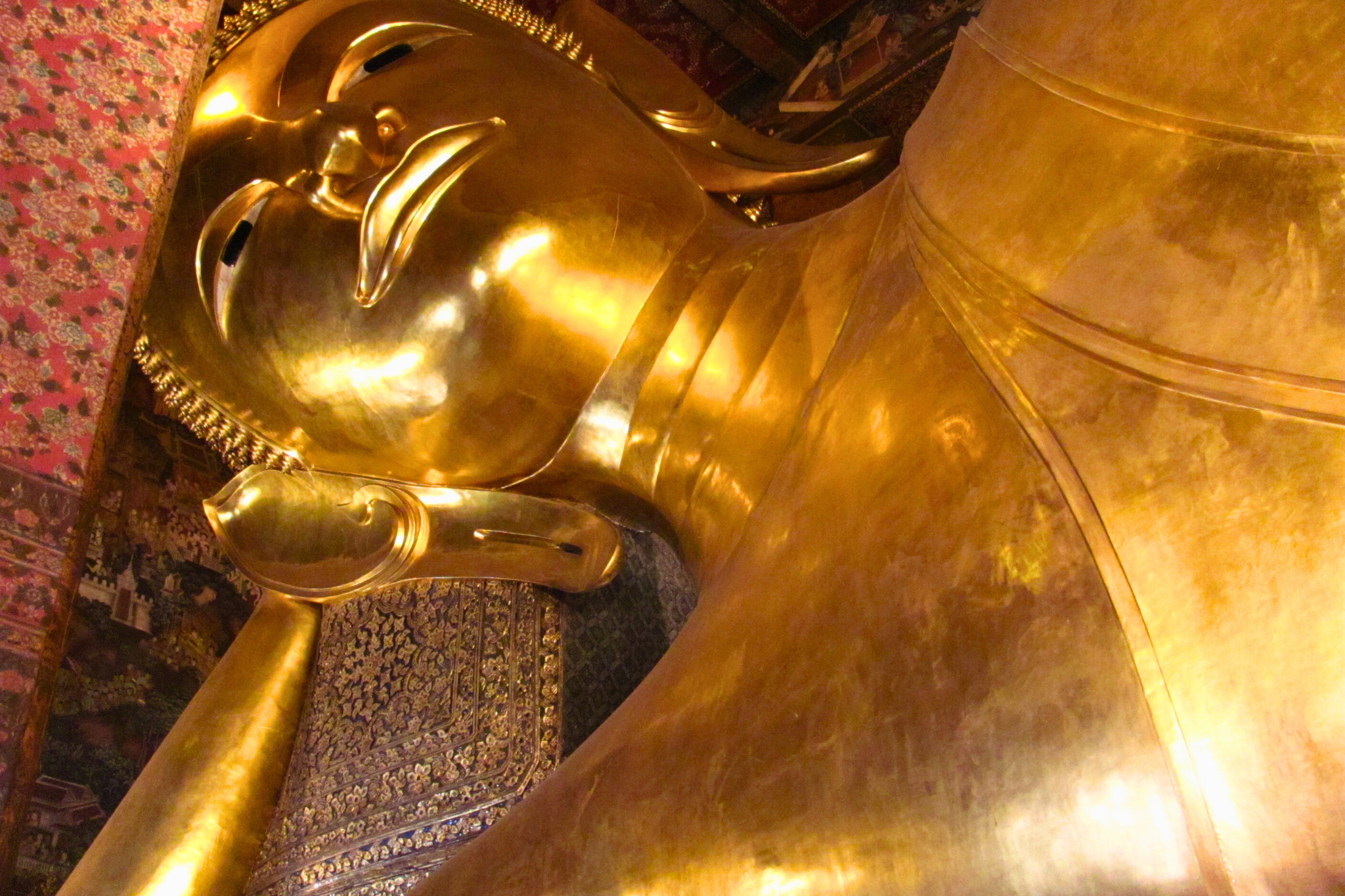
Here, you can witness the Reclining Buddha statue, measuring 46 meters in length and 15 meters in height, making it one of the largest Buddha statues in Thailand. The statue is covered in 336 layers of 18-carat gold, radiating a quiet grandeur. I was particularly mesmerized by the intricate mother-of-pearl inlays on the soles of the Buddha’s feet, which depict 108 lakshanas (auspicious Buddhist symbols) such as flowers, dancers, white elephants, and tigers.
The Reclining Buddha carries profound meaning. It does not merely depict the final moments of Siddhartha Gautama, but serves as a visual metaphor for liberation and the end of suffering. The statue represents the Buddha during his final moments on earth before entering Nirvana—symbolizing freedom from the material world and the cessation of the cycle of rebirth (samsara). The calm and relaxed posture of the Buddha is a powerful reminder that death is not something to be feared, but accepted as a natural part of life’s journey.
Fun Fact!
The Buddha passed away in his early 80s due to an illness caused by Sukaramaddava, often translated as “soft pork.” Some sources suggest that his final meal may have been poisonous mushrooms. From a medical perspective, however, the Buddha may have suffered from mesenteric infarction, a bacterial infection of the intestinal wall or mesentery. This condition can be fatal if untreated by surgery and is relatively common among the elderly.
What to See at Wat Pho Reclining Buddha
Beyond admiring the giant Buddha statue, visitors can also take part in a unique ritual at Wat Pho known as Coin Meditation. In this ritual, you drop coins into small metal bowls lined up along the wall behind the Reclining Buddha. For just 20 baht, you will receive 108 coins to place into the 108 bowls provided.
The number 108 is sacred in Buddhism, symbolizing the mental defilements that must be overcome to attain enlightenment. The donated coins are also used to help fund the maintenance and preservation of the temple. Many believe that if you successfully fill all 108 bowls while sincerely offering your prayers, the hopes and dreams you make may come true.

Wat Pho is not only a spiritual center, but also a living historical site. According to the official Wat Pho website, the temple is classified as a first-class royal monastery and was regarded as one of the most important temples during the reign of King Rama I of the Chakri Dynasty. The Chakri Dynasty—Thailand’s current royal house—was founded in 1782 by King Rama I, who also established Bangkok (Rattanakosin) as the capital. The dynasty is known for modernizing Thailand while preserving its traditions, and its monarchs are collectively referred to as the “Rama Kings.”
Wat Pho is also widely recognized as the birthplace of traditional Thai massage. This healing practice originally emerged within Thailand’s farming communities. Traditionally, each village had its own designated massage healer who helped relieve aches and pains from physical labor. These healers were often appointed elders and did not charge for their services, as the practice followed Buddhist teachings on compassion and care for others.
Wat Pho Thailand: Entrance Fee, Opening Hours, and Visitor Tips

The entrance fee to Wat Pho Thailand is 300 THB per person, which includes a complimentary bottle of water—an appreciated bonus under Bangkok’s tropical heat. The temple is open daily from 8:00 AM to 6:30 PM, allowing visitors to explore either early in the morning or during a more relaxed afternoon visit. To enjoy a quieter experience, arriving early in the day is highly recommended.
As Wat Pho Thailand remains an active religious site, visitors are expected to dress modestly, with shoulders and knees properly covered. Choosing lightweight and breathable clothing that follows these guidelines will help you stay comfortable while showing respect for local customs and traditions.
A visit to this historic temple offers not only visual beauty, but also a deeper connection to Thailand’s spiritual and cultural heritage—making Wat Pho a meaningful and enriching stop on any Bangkok itinerary.
Previous Posts




Leave a Reply